
StockWise – Case Study
Smart Warehouse Managment System
Overview
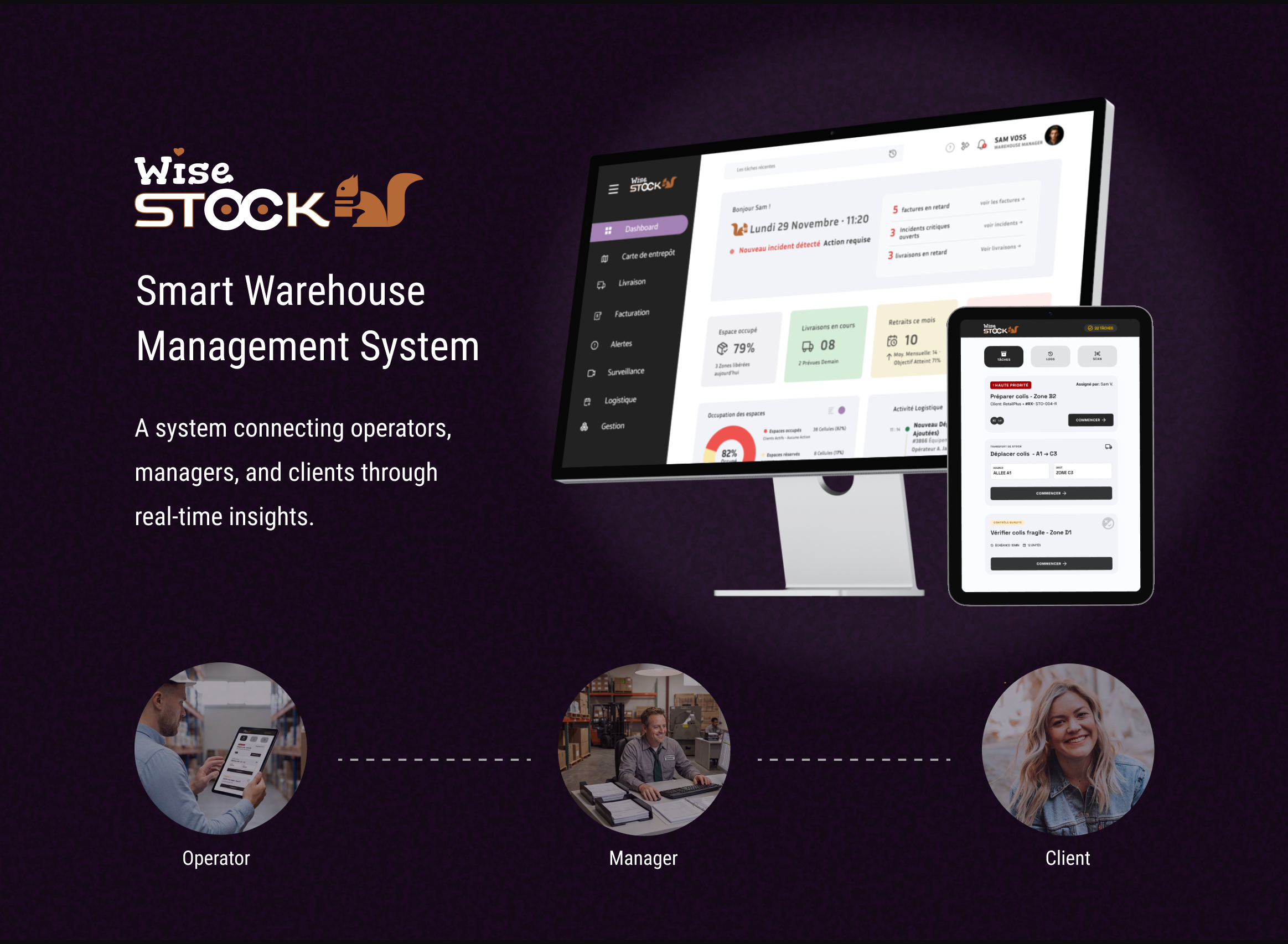
StockWise is a smart warehouse and logistics management platform designed to improve communication, visibility, and operational efficiency inside storage environments.
The platform connects operators, warehouse managers, and clients in one real-time ecosystem through incident reporting, inventory tracking, environmental monitoring, and warehouse management tools.
The project was designed during an intensive UX/UI training program at CEPEGRA.
DURATION & Role:
Role: UX & UI Designer
Project duration: 4 Weeks
Deliverables: User research, persona creation, wireframing, user testing
The Problem
Many companies rely on external warehouses to store products, equipment, or sensitive goods.
However, communication between operators, managers, and clients is often fragmented.
Common issues include:
- Delayed incident reporting
- Lack of visibility
- Poor communication during emergencies
- Difficulty tracking warehouse conditions
- Slow operational decision-making
In many cases, clients only discover damaged goods too late.
Research & Key Insights
Many companies rely on external warehouses to store products, equipment, or sensitive goods.
However, communication between operators, managers, and clients is often fragmented.
Common issues include:
- Delayed incident reporting
- Lack of visibility
- Poor communication during emergencies
- Difficulty tracking warehouse conditions
- Slow operational decision-making
In many cases, clients only discover damaged goods too late.
Personas
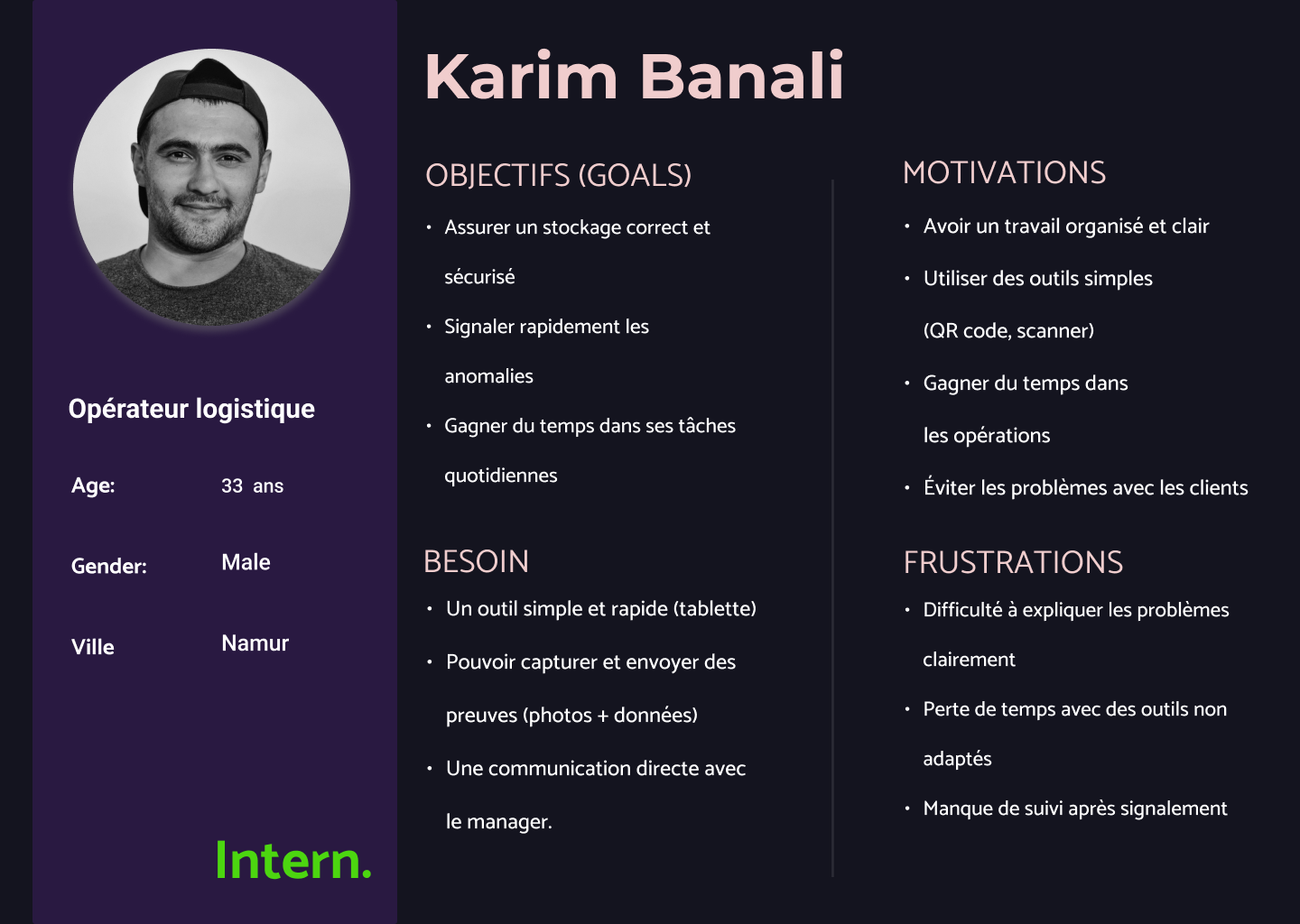
Karim – Warehouse Operator
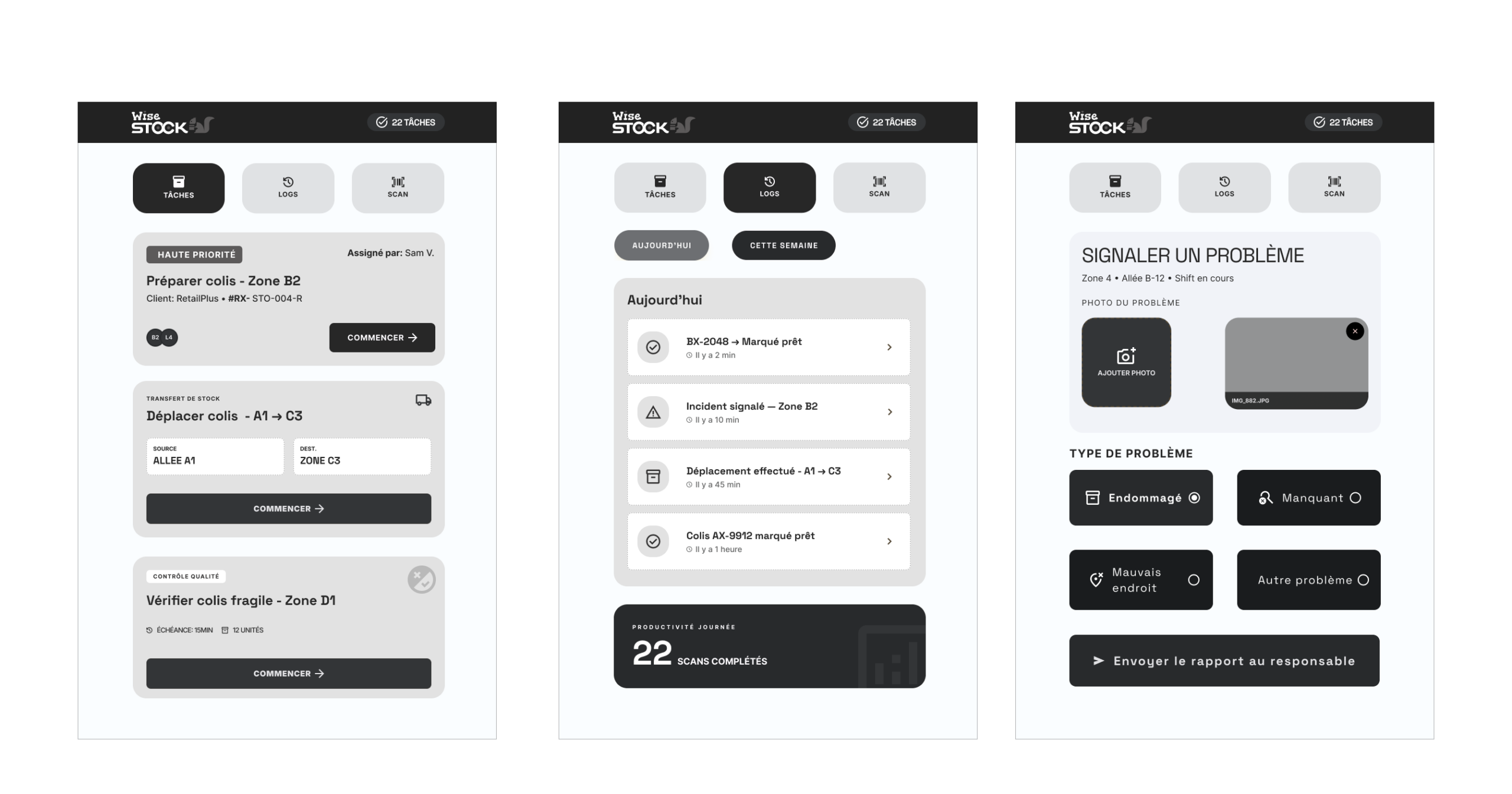
Uses a tablet to scan products, report incidents, and manage warehouse tasks quickly.
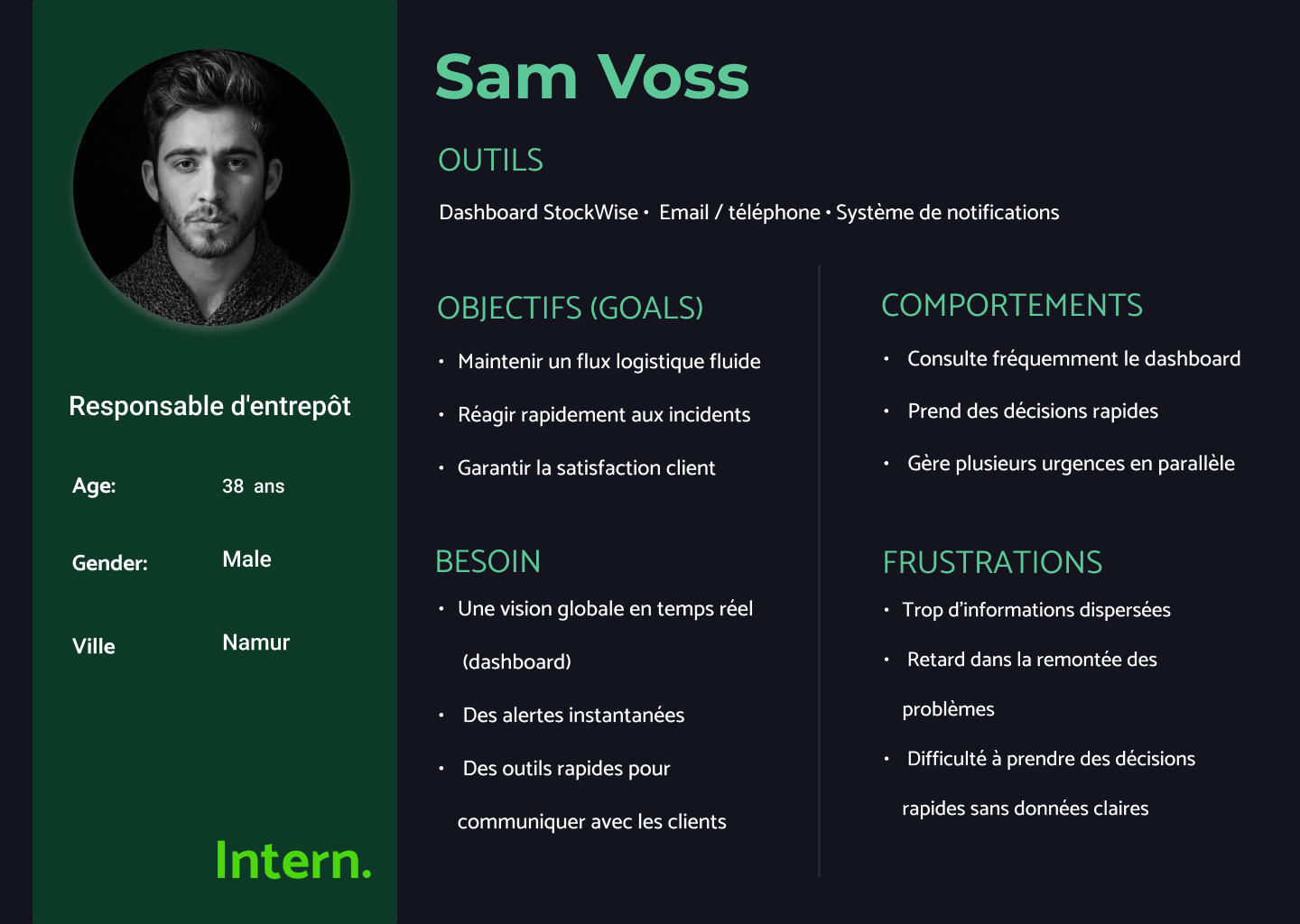
Sam Voss – Warehouse Manager
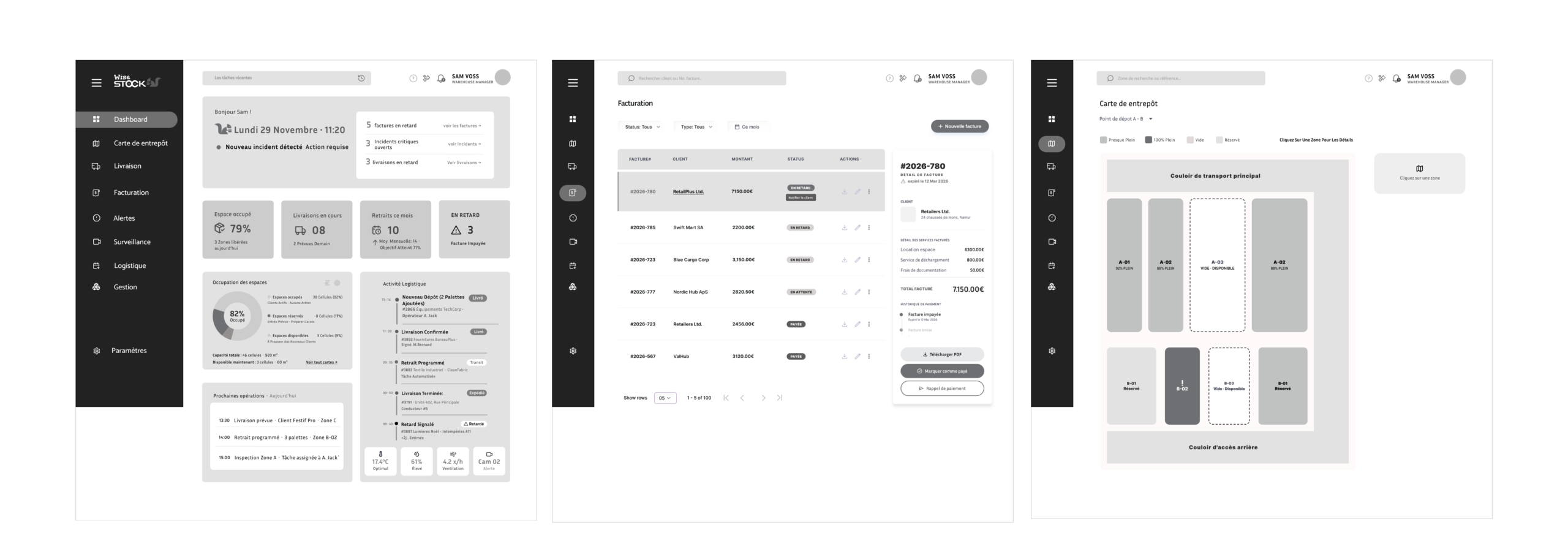
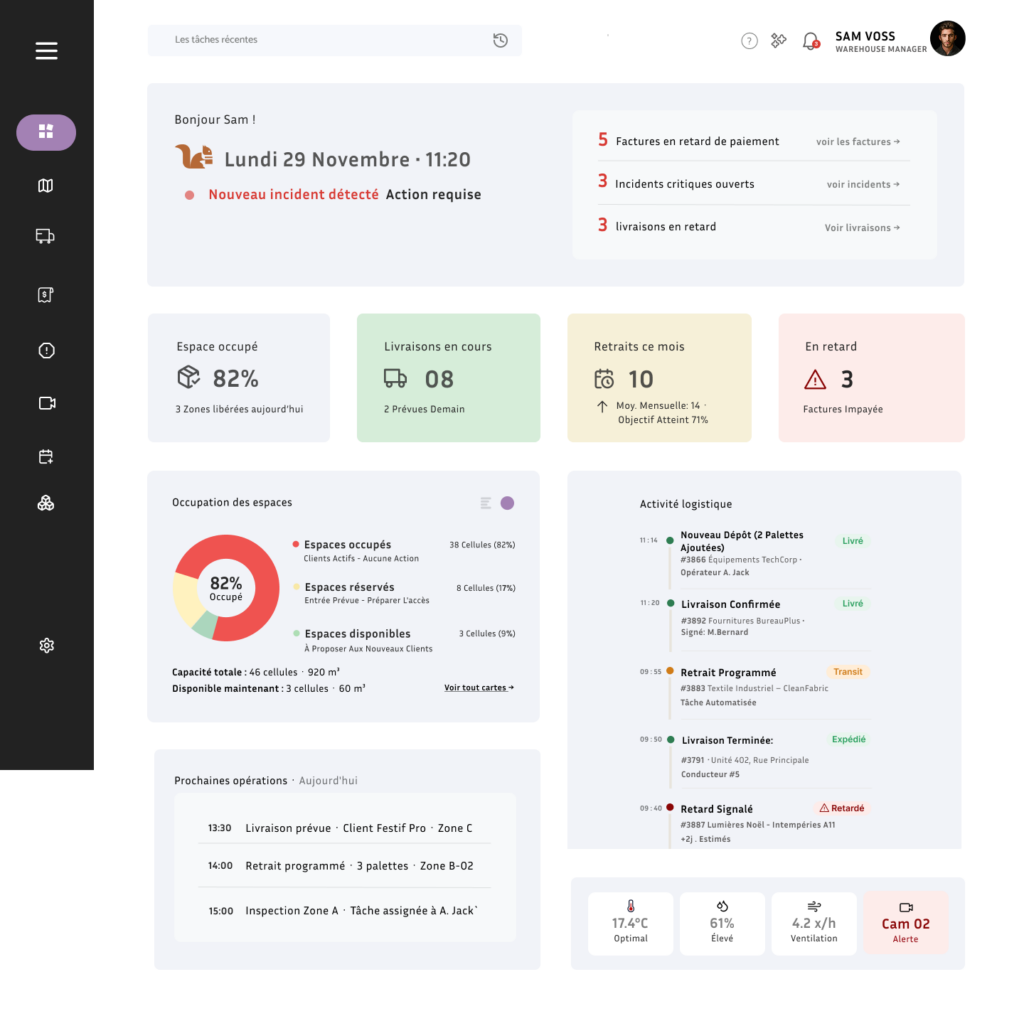
Monitors operations, incidents, deliveries, warehouse occupancy, and environmental conditions through a centralized dashboard.
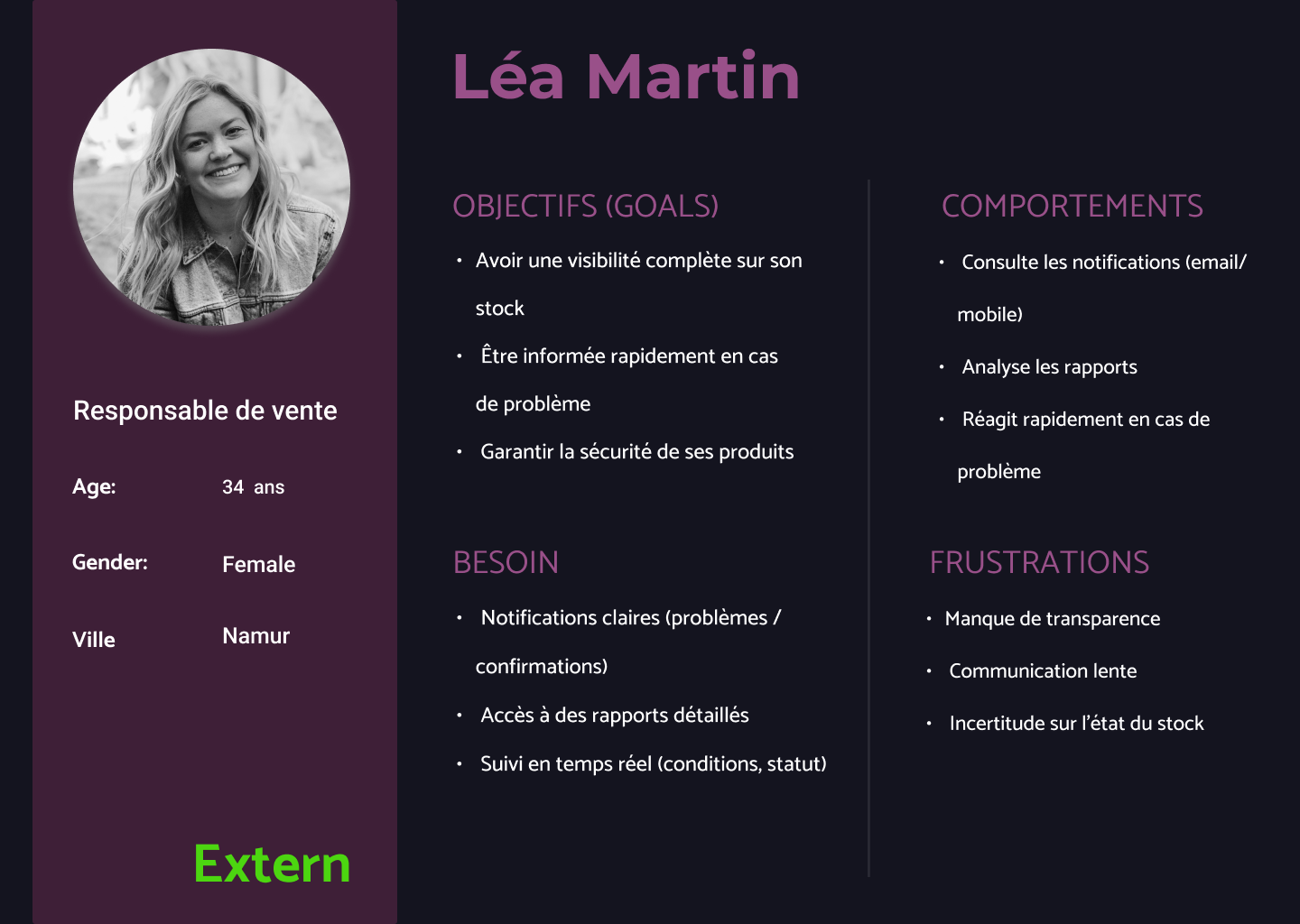
Léa Martin – Client
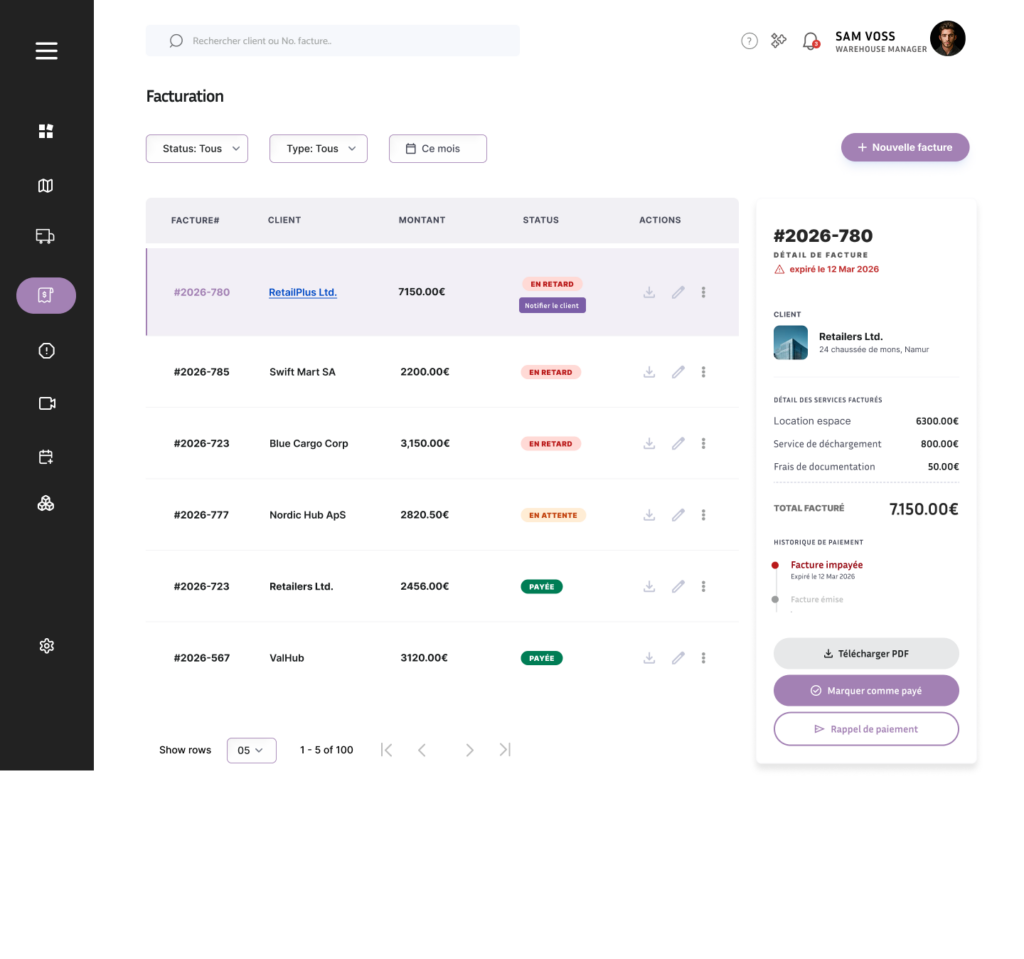
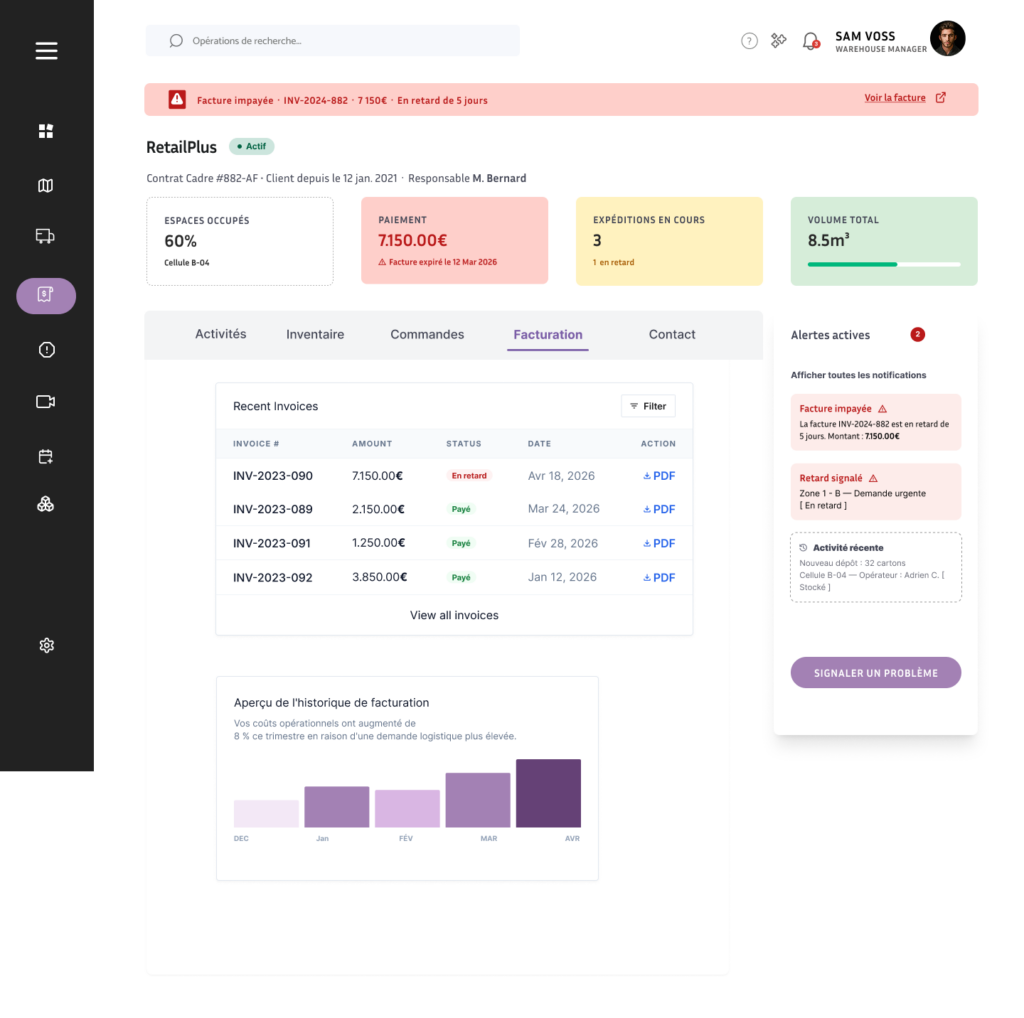
Needs visibility regarding stored goods, incidents, invoices, and warehouse communication.
UX Challenges
The main UX challenges included, reducing cognitive overload on the dashboard, designing interfaces adapted to stressful environments, creating a clear alert hierarchy, simplifying operational workflows, ensuring fast access to critical actions and maintaining consistency across dashboard and tablet interface.
The Solution
StockWise was designed as a connected operational ecosystem.
The platform includes:
- A real time manager dashboard
- A tablet interface for warehouse operators
- Incident management workflows
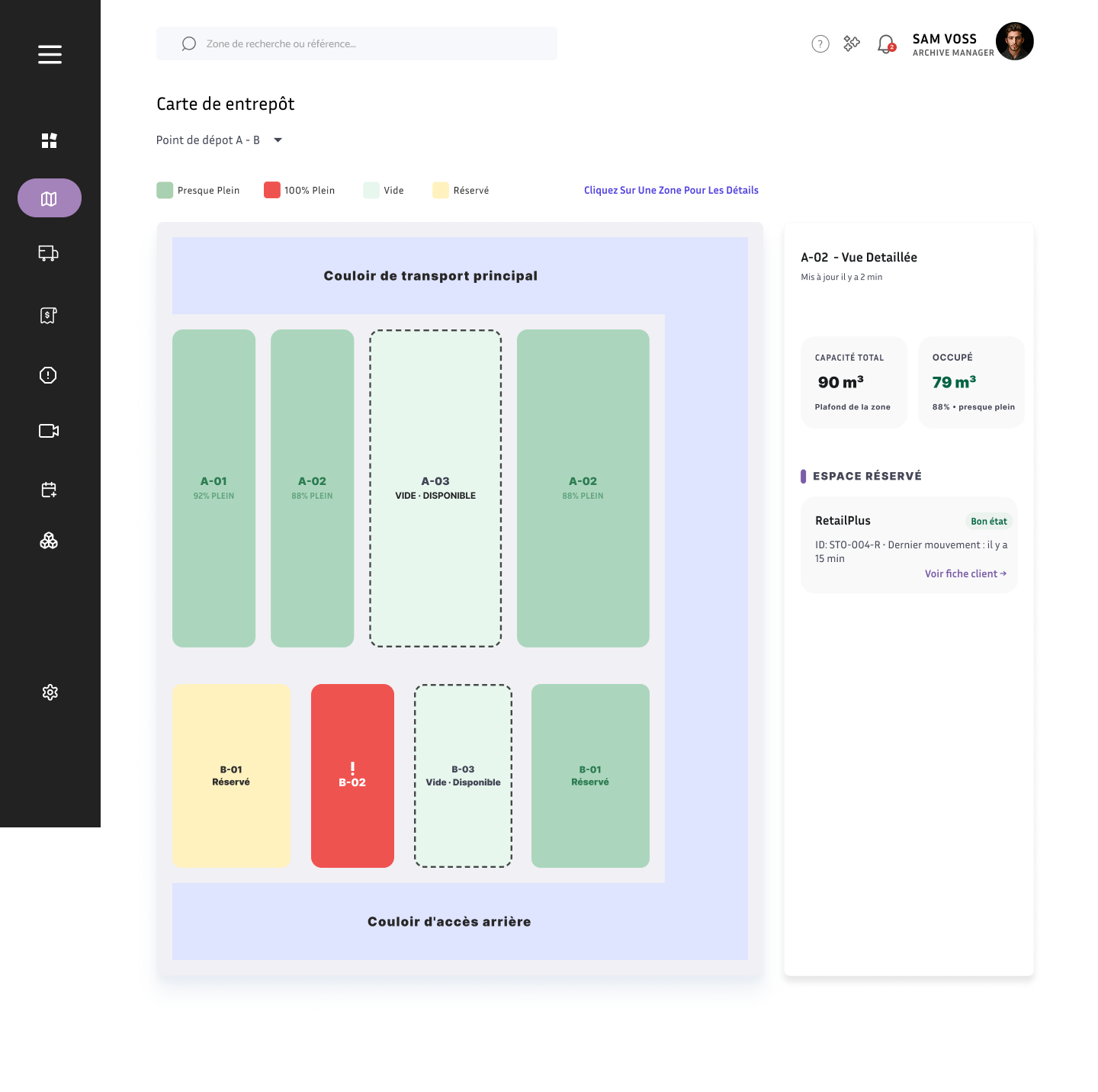
- Warehouse map visualization
- Environmental monitoring
- Client management interfaces
- Logistics and delivery tracking
The system enables operators to instantly report issues while managers receive real time alerts and can take immediate action.
User Flow
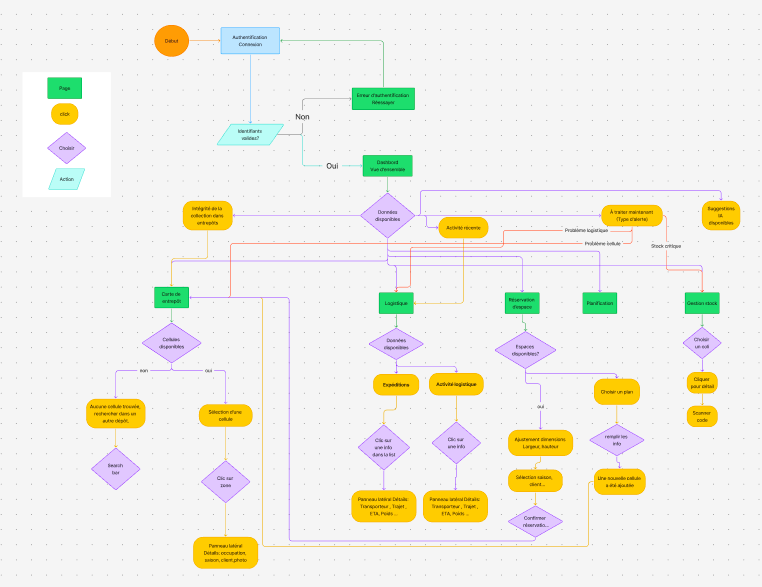
The platform structure was designed around operational priorities.
Main sections:
- Dashboard
- Logistics
- Warehouse Map
- Clients Deliveries
- Incidents & Alerts
- Monitoring & Sensors
- Billing
- Inventory
The goal was to separate operational actions from informational content to reduce stress and improve navigation clarity.
Key Design Decisions
Real-Time Alerts:
Critical incidents use strong visual hierarchy with clear prioritization.
Simplified Tablet Experience:
Operator interfaces were intentionally minimal to support fast actions inside warehouse environments.
Environmental Monitoring:
Temperature, humidity, and security systems were integrated directly into the dashboard to increase trust and operational visibility.
Connected Communication:
The platform creates a direct workflow between operators, managers, and clients.
Mid-Fi Prototype
I developed a clickable prototype for validation testing,
refined the user interface concepts, and created medium-fidelity wireframes. After validation testing, everything went smoothly, which allowed me to build my Hi-Fi prototype.
High-Fidelity Design
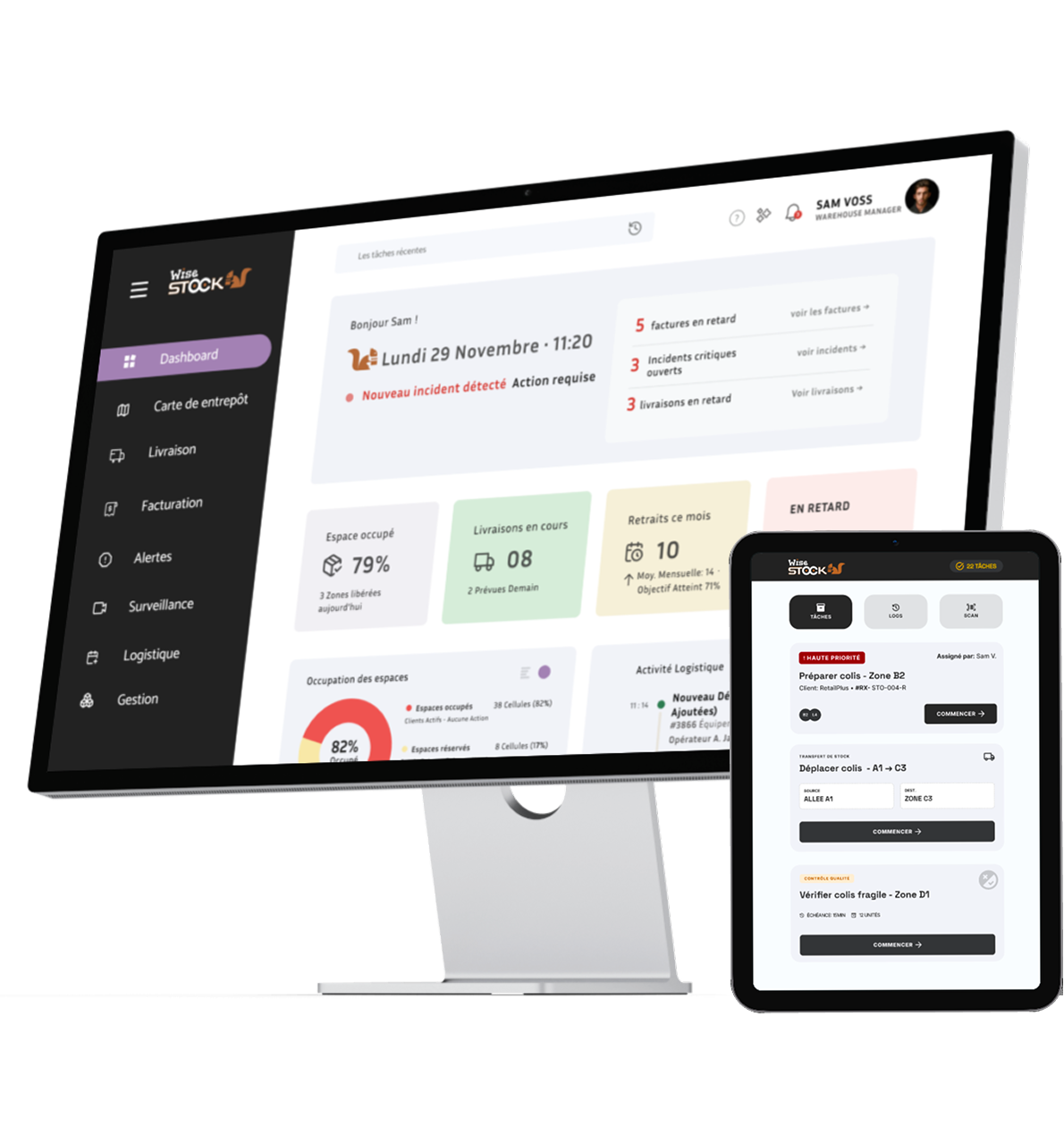
The interface was designed to support fast decision-making in operational environments where visibility and responsiveness are critical.
The dashboard prioritizes:
- real-time alerts,
- warehouse activity,
- environmental monitoring,
- and quick access to operational actions.
A strong visual hierarchy was used to reduce cognitive overload and help managers identify urgent situations immediately.
For operators, the tablet experience was intentionally simplified with large touch targets and minimal steps to support fast interactions inside warehouse environments.
The overall system was designed to create a connected workflow between operators, managers, and clients while maintaining clarity across complex logistics operations.
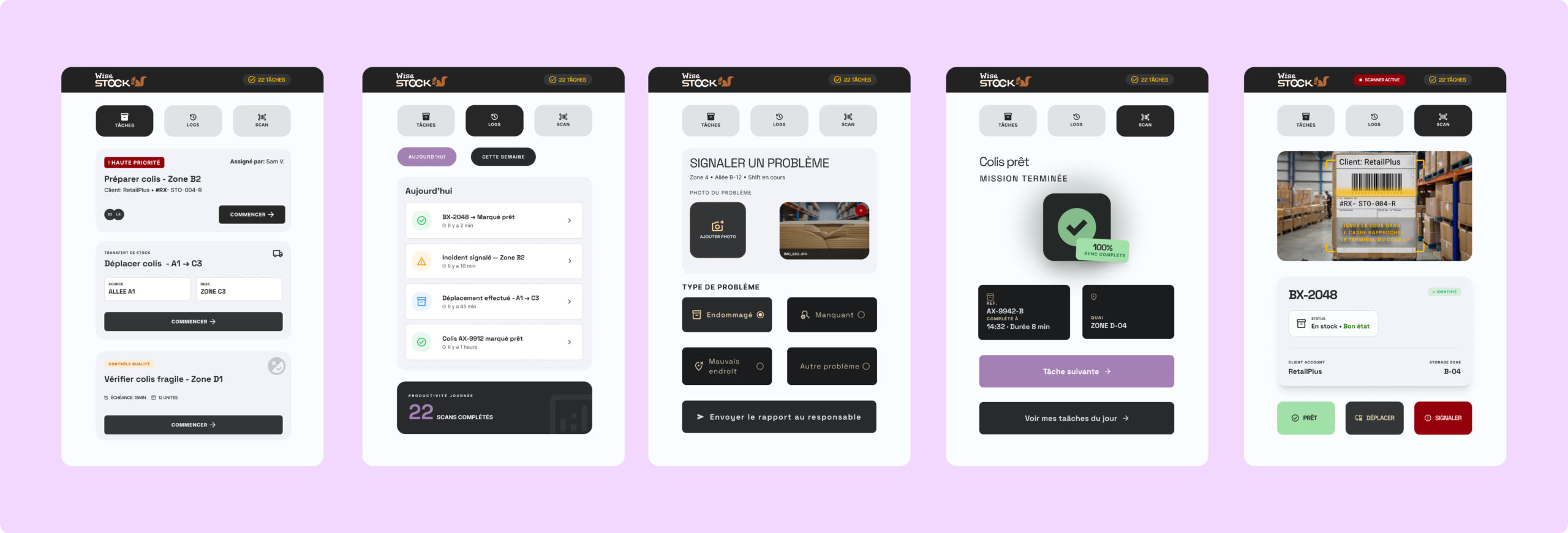
Prototype Flow
This prototype demonstrates the real-time workflow between the warehouse operator and the warehouse manager inside the StockWise ecosystem.
The scenario begins with Karim, the warehouse operator, using the tablet interface to scan a package and report a damaged item directly from the warehouse floor.
Once the incident is submitted, the alert is instantly transmitted to Sam’s management dashboard, where the manager receives a real-time notification, reviews the issue, and takes action by sending a message to notify client.
The goal of this flow was to improve communication speed, operational visibility, and decision-making during critical warehouse situations.
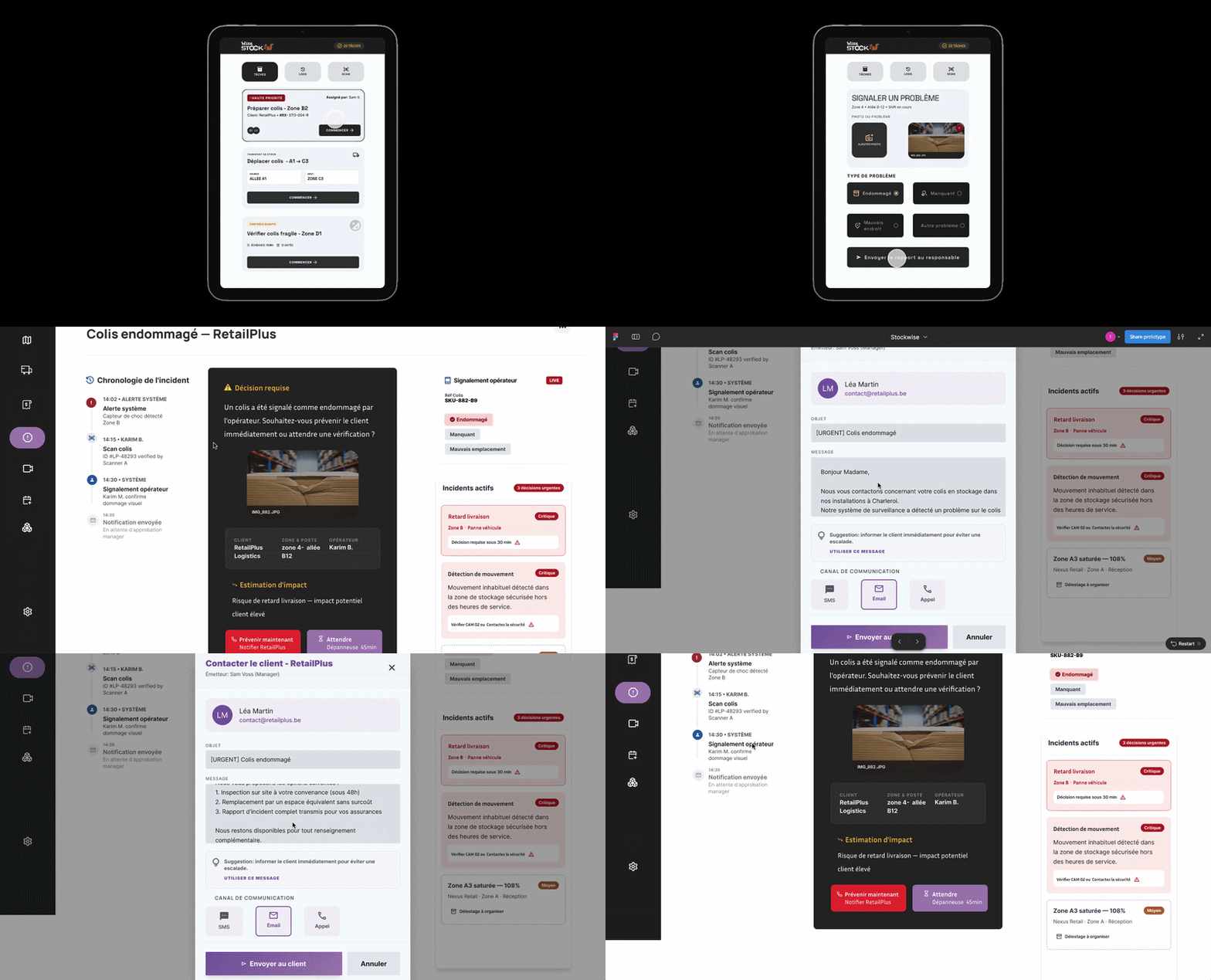
Prototype / Figma Link
Final Outcome
The final result is a complete warehouse management experience focused on:
- Faster communication
- Better operational visibility
- Reduced response time
- Simplified workflows
- Clear incident management
The project evolved from a seasonal storage concept into a broader logistics and warehouse management system.
What I Learned
This project taught me how to design for complex operational systems and stressful environments.
I learned:
- how to prioritize information
- how to simplify complex workflows
- how to design for multiple user roles
- and how UX impacts operational decision-making in real-time systems.
It also improved my understanding of product thinking, dashboard UX, and B2B workflows.
MORE PROJECTS
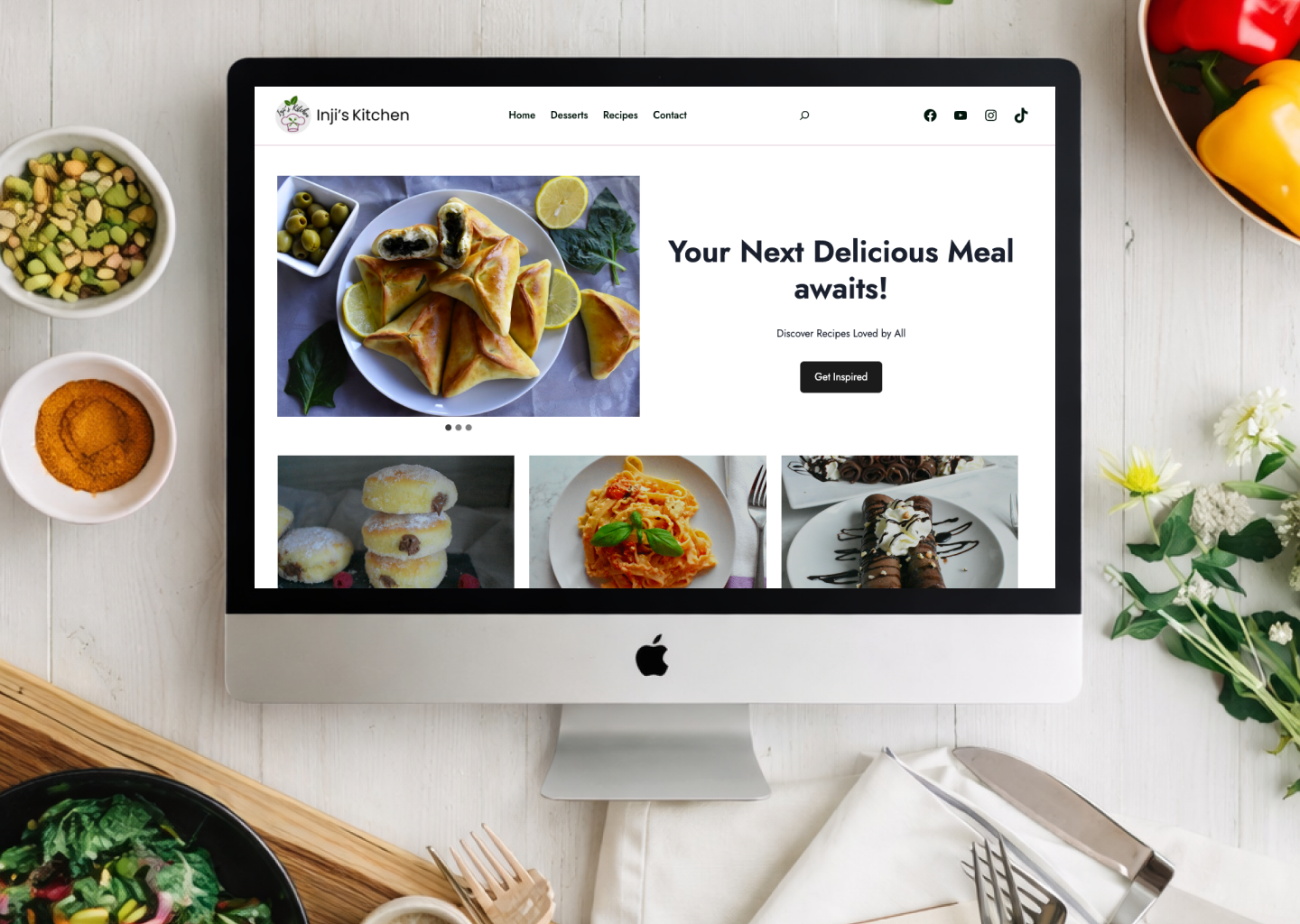
Inji’s Kitchen
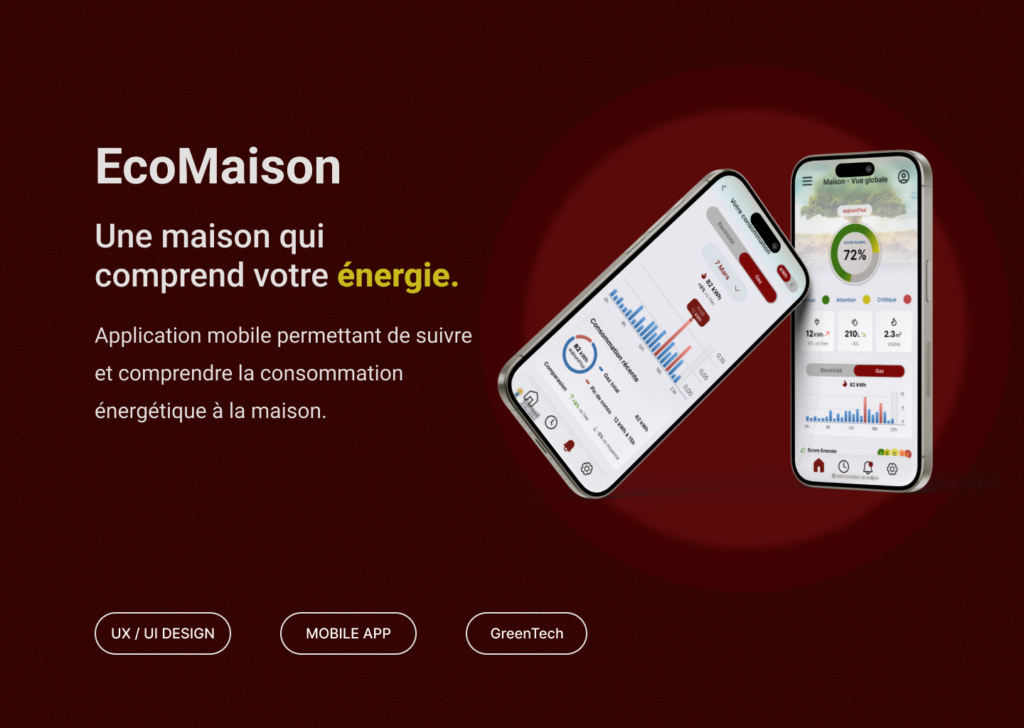
EcoMaison
